
3 School Court, Durham DH7 7RY
07910 030085
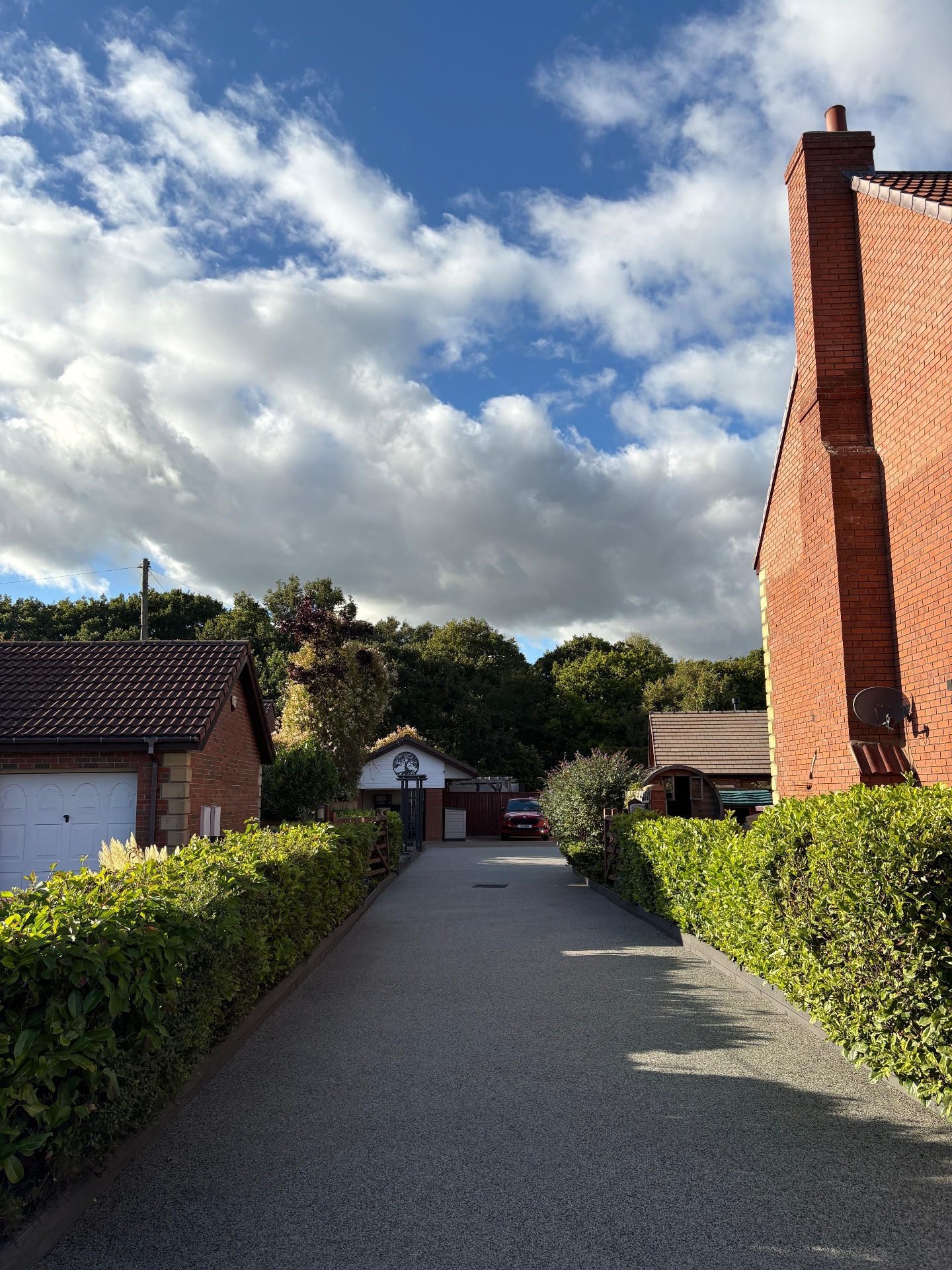
Long smooth black tarmac driveway leading between hedges in the North East

Tarmac Driveways

Tarmac Driveways
Smooth, Black & Hard-Wearing
Across the North East

Hot-laid bitumen macadam driveways with crisp block edging, proper falls and a 1-year workmanship guarantee in writing. Cost-effective, fast to install, and engineered to last twenty years.

  • 20+ years installing
  • 1-year written guarantee
20+ years' experience
Fully insured
Free written quote
North East coverage

The Service

Tarmac Driveways, explained properly.

No filler, no jargon. What you're getting, why you'd want it, and what makes the difference between a good install and a bad one.

What it is

Tarmac, properly called bitumen macadam, is hot-mixed stone and bitumen binder laid in two layers (base course and wearing course) and compacted with a heavy roller. The result is a smooth, jet-black, jointless driveway surface.

Who it's for

Homeowners who want the cleanest, fastest, most cost-effective driveway upgrade, particularly for long or wide driveways where unit cost matters. Also the right choice for properties where a uniform dark surface complements the architecture better than block or resin.

When you need it

When your existing driveway is cracked, potholed or simply dated. Tarmac can be laid over sound existing tarmac (an overlay) or as a full replacement, the right approach depends on the condition of what's already there.

Why it matters

Because tarmac success comes down to the right binder course depth, the right wearing course gradation and a fast, hot lay before the mix cools. Cheap operators skip the binder layer entirely and lay a thin wearing course over loose stone, that's the kind of work that fails in two winters.

What Goes Wrong

The mistakes that cost you a re-lay in five years.

We get called in to fix all four of these every month. None of them are accidents, they're predictable consequences of cutting the wrong corner.

Cracks within a year

Almost always caused by skipping the binder course or laying the wearing course too thin. Once cracks open, water enters, freezes and the failure spreads exponentially each winter.

Potholes around the edges

Tarmac without a structural edge restraint crumbles at the perimeter under vehicle load. The first pothole is at the edge, every time.

Standing water and oil staining

Bad falls leave puddles; standing water softens the binder; oil drips soften it further. A driveway with no fall becomes a sponge, and a stained one.

Cold-laid 'driveway repair' scams

Anyone offering to lay cold tarmac out of the back of a van is selling failure. Tarmac has to be hot-laid above 100°C and compacted within minutes, cold-laid product is bag-and-bucket repair material, not driveway surfacing.

Our Process

Five steps. Same on every installation.

  1. 01

    Survey & written quote

    Site measure, drainage and falls check, edging design, and a fully itemised written estimate.

  2. 02

    Excavation & sub-base

    Existing surface lifted, excavated to 200mm, MOT Type 1 compacted in layers with a vibratory roller.

  3. 03

    Block edging

    Concrete-haunched block paved edge laid first, the structural perimeter that stops the tarmac crumbling and gives the finished driveway its crisp line.

  4. 04

    Base course & wearing course

    65mm of 20mm binder course hot-laid and rolled, followed by 25mm of 6mm wearing course hot-laid and rolled within the working window. Both layers hand-finished at the edges.

  5. 05

    Compaction, seal & finish

    Heavy roller compaction in multiple passes, edges hand-tamped, surface swept and inspected. Driveway usable next day, fully cured within 30 days.

The Benefits

Why homeowners across the North East choose this surface.

Cost-effective per square metre

Lower material and labour cost than block or resin, the best price-per-metre on long, wide or shared driveways without compromising on lifespan.

Fast installation

Most domestic tarmac driveways are completed in 3–4 working days. You're not living with excavation for two weeks.

Smooth, jointless surface

No joints to weed or re-sand. Easy to keep clean with a jet wash. Wheelchair, pram and mobility-scooter friendly.

20-year lifespan

Hot-laid tarmac on a proper sub-base with a binder course lasts 20+ years. Workmanship guaranteed in writing for 1 year.

Easy to repair

Damage can be cut out and patched with matching hot-laid material, the patch is visible for a season then weathers in.

Strong load capacity

Handles vans, motorhomes and trailers without issue when the sub-base is correct. Used for commercial forecourts and rural lanes for a reason.

The Detail

Everything you'd ask a specialist on the doorstep.

Materials, methods, variations, and the small decisions that separate a 20-year driveway from a five-year one.

07910 030085

The two-layer system

A proper tarmac driveway is laid in two distinct layers. The binder course (sometimes called the base course) is 65mm of 20mm aggregate hot-mixed with bitumen, the structural body of the driveway. The wearing course is 25mm of 6mm aggregate hot-laid on top, the smooth, fine-textured surface you actually see. Operators who skip the binder course and lay only a thin wearing course are saving themselves a day and you a decade of life.

Hot-laid versus cold-laid

Tarmac must be laid hot, typically delivered at 150°C and worked above 100°C, so the bitumen flows around the aggregate and bonds chemically as it cools. Cold-laid material is essentially gravel coated in cold pour, sold in bags for pothole repair. Any 'driveway' offered using cold-laid product is repair material being mis-sold as paving.

Block paved edging is structural

The block paved kerb around the perimeter of a tarmac drive isn't just decorative, it's the structural edge restraint that stops the tarmac crumbling under vehicle load. The blocks are concrete-haunched into a wet bed and laid before the tarmac goes down, then the tarmac is laid tight against them.

Drainage, falls and SuDS

Tarmac is impermeable, so falls and drainage must be designed in. We set falls at 1:60 minimum to a linear drain, soakaway or permeable strip. Where SuDS compliance is required (front gardens over 5m² draining to the road), we either install a permeable strip at the perimeter or specify a permeable tarmac wearing course.

Overlay versus full replacement

If your existing tarmac is structurally sound, no significant cracks, no movement, decent falls, a 25mm wearing-course overlay can give it another 10–15 years of life at a fraction of the replacement cost. If the existing base is failing, an overlay is throwing money away. We'll tell you straight which one your driveway needs.

FAQs

Straight answers, no sales talk.

Still have a question? Pick up the phone.

How much does a tarmac driveway cost?
+
Typical domestic tarmac driveways across the North East work out between £55 and £85 per square metre fully installed, including block edging and standard drainage. Larger driveways come down in cost per metre. Every estimate is itemised in writing.
How long does tarmac last?
+
20+ years when laid as a proper two-layer hot-laid system on a compacted sub-base with structural edging. Our workmanship guarantee is 1 year in writing.
Can you overlay my existing tarmac?
+
Only if the existing base is sound, no significant cracking, no movement, decent falls. We'll inspect honestly and tell you whether an overlay is value for money or a waste of it.
How long until I can drive on it?
+
Light vehicle use after 24 hours; full cure 30 days. Avoid sharp turns and prolonged static loading (parking the same wheel in the same spot all day) for the first month.
Will the surface go grey?
+
It will lighten slightly as the bitumen surface oxidises in UV, most noticeable in the first 6–12 months. The driveway stays jet black with annual jet-washing; a bitumen seal coat at year 5 restores the finish for another 5–10 years.
Can tar be coloured?
+
We can lay red, green or buff coloured tarmac as a wearing course, typically used for decorative borders, paths or to differentiate parking bays. Coloured tarmac costs more and the colour fades slightly over time; for a long-term coloured finish, resin bound is the better choice.
Do I need planning permission?
+
Standard impermeable tarmac over 5m² in a front garden draining to the road requires planning. We design either with a permeable strip or with drainage to a soakaway to keep within permitted development rules.
What about oil drips and leaks?
+
Hot-laid tarmac resists short-term spills well. Long-term oil leaks soften the binder and cause localised damage; jet-wash spills promptly and we can supply degreaser for stubborn marks. A drip tray under any leaking vehicle is sensible.
How long does installation take?
+
A typical domestic tarmac driveway takes 3–4 working days from excavation to final roll. Larger driveways 5–7 days. You'll have a firm schedule in writing before we start.

Where We Work

Tarmac Driveways installed across the North East.

Durham-based, on the road across the region every week.

Ready to start your tarmac driveways project?

Free site survey. Written estimate. No pressure, ever.

Backed by 20+ years' experience and a 1-year workmanship guarantee in writing.

Call NowFree Estimate