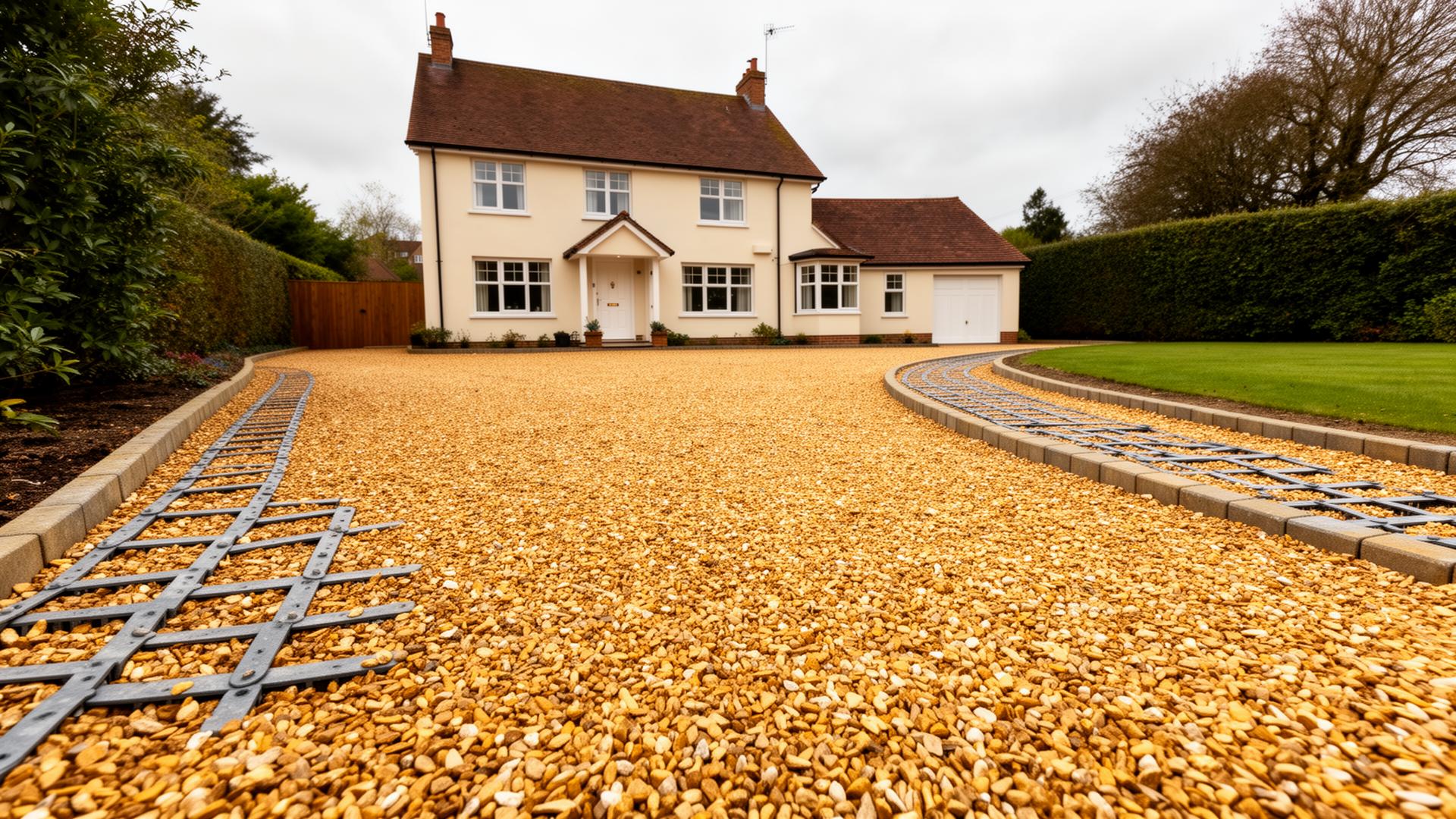
Gravel Driveways Installed with Stabilisation Across the North East
Cost-effective, characterful gravel driveways laid with proper sub-base, edge restraints and optional plastic-grid stabilisation. The classic country-property finish, without the rutting and migration.
No filler, no jargon. What you're getting, why you'd want it, and what makes the difference between a good install and a bad one.
What it is
Gravel driveways are loose decorative aggregate laid over a compacted sub-base, contained by edge restraints, and optionally stabilised with a plastic honeycomb grid to prevent migration and rutting. Sizes range from 10mm pea gravel to 20mm decorative chippings.
Who it's for
Homeowners with traditional, country or period properties where loose-stone aesthetics suit the architecture. Also the right choice where budget is tight or where a temporary surface is needed before a longer-term commitment.
When you need it
When you want characterful, traditional kerb appeal at a lower price point than block, resin or tarmac. Particularly suited to long approach drives, parking areas off the main driveway, or country properties where loose gravel reads as authentic.
Why it matters
Because the difference between a gravel driveway that lasts and one that ruts, migrates and ends up in the road is invisible, it's all about the sub-base depth, the edge restraints and whether or not it's been gridded. Done properly, gravel can last fifteen years; done badly, it's failed within a winter.
What Goes Wrong
The mistakes that cost you a re-lay in five years.
We get called in to fix all four of these every month. None of them are accidents, they're predictable consequences of cutting the wrong corner.
Gravel migrating off the driveway
Without proper edge restraints and the right gravel size (10–20mm), gravel walks off the driveway under tyre action, into the lawn, onto the road, into the gutter. Within a year you're refilling tonnes of stone.
Ruts and tracks where cars park
Loose gravel without grid stabilisation develops permanent ruts wherever vehicles regularly track. You end up raking the surface weekly to keep it level.
Weeds growing through the gravel
Without a permeable membrane between the sub-base and the gravel, weeds germinate freely. A membrane adds £3–5/m² to the install and saves years of weed-pulling.
Gravel mixed into the sub-base
Cheap installs lay gravel directly onto soil. Within months the gravel and the topsoil have churned into mud-and-stone porridge, and the driveway has effectively gone.
Our Process
Five steps. Same on every installation.
01
Survey & quote
Site measure, gravel options and sample colours, decision on grid stabilisation, written itemised estimate.
02
Excavation & sub-base
Excavated to 150–200mm, MOT Type 1 compacted in 100mm layers, the same structural sub-base as a tarmac or block driveway.
03
Edge restraints
Timber, metal, concrete or block-paved edging set around the perimeter to contain the gravel. Without this, the gravel is gone within a year.
04
Membrane & optional grid
Geo-textile membrane laid across the sub-base to suppress weeds and stop the gravel mixing in. Plastic honeycomb grid (NewGrass, CORE Drive) laid above the membrane where stabilisation is wanted, no rutting, no migration, no raking.
05
Gravel installation
Decorative gravel poured to fill the grid cells or to 40mm depth on un-gridded installations. Raked level, edges tidied, site cleaned.
The Benefits
Why homeowners across the North East choose this surface.
Lowest cost per square metre
Gravel is the most affordable proper driveway surface, typically half the cost per metre of block paving or resin.
Fast installation
Most domestic gravel driveways are completed in 2–3 working days. Faster install means lower labour cost, passed on in the price.
Naturally permeable
Fully SuDS-compliant with no planning consent needed. Surface water drains straight through the gravel into the sub-base.
Audible security benefit
Crunching gravel makes silent approach essentially impossible, an underrated security feature on isolated properties.
Easy to refresh
A fresh tonne of decorative gravel raked over a tired surface brings it back to new for a few hundred pounds. Try doing that with tarmac.
Wide aesthetic range
From traditional buff Cotswold chippings to contemporary grey granite to characterful Scottish Pebble, the design palette is broader than any other driveway surface.
The Detail
Everything you'd ask a specialist on the doorstep.
Materials, methods, variations, and the small decisions that separate a 20-year driveway from a five-year one.
10mm and 14mm are the standard driveway grades, small enough to compact under tyres, large enough not to track into shoe treads or migrate easily. Anything smaller than 10mm walks into the house; anything larger than 20mm gives an uncomfortable ride and damages alloy wheels. Avoid pea gravel (rounded edges) on driveways, angular gravel locks together better.
Grid stabilisation systems
Plastic honeycomb grid systems, CORE Drive, NewGrass, X-Grid, transform what a gravel driveway can do. The grid cells hold the gravel in place, prevent rutting, prevent migration and let you park, turn and reverse without raking. Adds £25–35/m² to the install and effectively eliminates the maintenance overhead of traditional gravel.
Sub-base, membrane and edging, non-negotiable
A gravel driveway without a sub-base is mud-and-stone porridge by month six. A gravel driveway without a permeable membrane is a weed nursery. A gravel driveway without edge restraints is gravel everywhere except where you wanted it. These three elements are not optional on a proper install, they're the difference between a driveway and a pile of stones.
Loose gravel versus self-binding gravel
Self-binding gravels (Breedon gravel, Cedec, hoggin) are a clay-bound aggregate that compacts to a firm but porous surface, the look of gravel without the looseness. Excellent for paths and lightly-trafficked areas; less suitable for daily-driven driveways where the compacted surface eventually breaks up under repeated turning.
Maintenance and refresh
Even gridded gravel needs occasional top-up, typically a tonne every 3–5 years on a domestic drive to keep the surface looking fresh. Annual raking, weed treatment along the edges, edge restraint check, the routine maintenance is light but real.
FAQs
Straight answers, no sales talk.
Still have a question? Pick up the phone.
How much does a gravel driveway cost?
+
Standard installed gravel driveways across the North East work out between £40 and £70 per square metre. Grid-stabilised installs run £65–£95/m², more per metre but eliminates the rutting and raking maintenance.
Will the gravel get stuck in my tyres?
+
Not with the correct 10–20mm size laid over a compacted sub-base. Pea gravel (rounded, often smaller) does track into tyre treads; angular driveway gravel does not.
How long does a gravel driveway last?
+
10–15 years with normal use and occasional top-up. Gridded gravel installations last longer because the surface doesn't migrate or compact unevenly.
Will I need to top up the gravel?
+
Yes, typically a tonne or two every 3–5 years on a domestic drive to keep the surface looking fresh. Gridded installations need topping up less frequently.
Is gravel suitable for sloped driveways?
+
Loose gravel struggles on slopes steeper than 1:10, it migrates downhill under tyre action. Grid-stabilised gravel handles slopes up to 1:6 without issue.
Do I need planning permission?
+
No, gravel is fully permeable and meets SuDS requirements for front-of-property surfacing. No planning consent required.
Will weeds grow through?
+
Not if a proper geo-textile membrane is installed below the gravel. Without a membrane, you'll be pulling weeds annually.
Can I lay gravel over my existing driveway?
+
Possibly, if the existing surface is structurally sound and free-draining. Most overlays of this kind are a short-term solution. A proper install with new sub-base is the better long-term decision.
Is gravel noisy?
+
Yes, audibly, gravel crunches under tyres. Most owners see this as a security benefit; it's worth being aware of if your driveway sits close to a bedroom window.